|
|
|
|
|
|
|
|
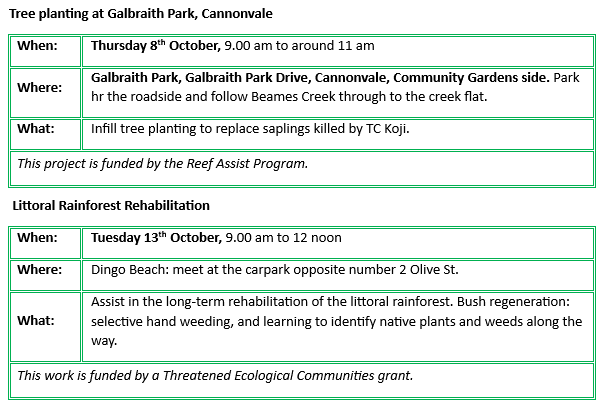
Coming up this month:
|
|
As with all of our activities, please wear enclosed shoes and sun-smart clothing, & bring a water bottle.
|
|
|
|
To help with car-pooling and catering, please RSVP.
|
|
If you need a ride, or can provide one, please let us know.
|
|
|
|
|
|
|
|
Nursery open Saturday 3rd and 17th of October.
|
|
|
Where: 33 Kelsey Creek Rd Proserpine
|
When: 9am to 12 noon Tuesday & Thursday, & 1st & 3rd Saturday each month.
|
|
What: A huge range of local native plants grown from locally collected seed, at great prices from $3.50. EFTPOS available. Gift vouchers available for a gardener you know. Knowledgeable staff & volunteers are on hand for friendly advice.
|
|
|
|
|
|
Nursery Volunteer activities
|
Where: 33 Kelsey Creek Rd Proserpine
|
When: Tuesday & Thursday mornings 9am to 12 noon.
|
|
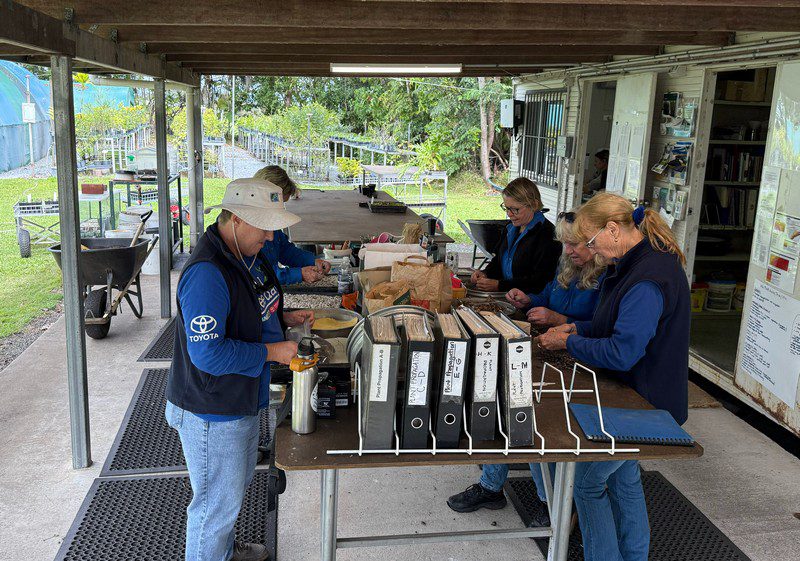
What: Plant propagation, native seed sowing & preparation, nursery maintenance tasks, plant propagation and a great morning tea with a fantastic bunch of volunteers.
|
|
Please wear sun protection and closed-in shoes.
|
|
|
|
|
|
|
|
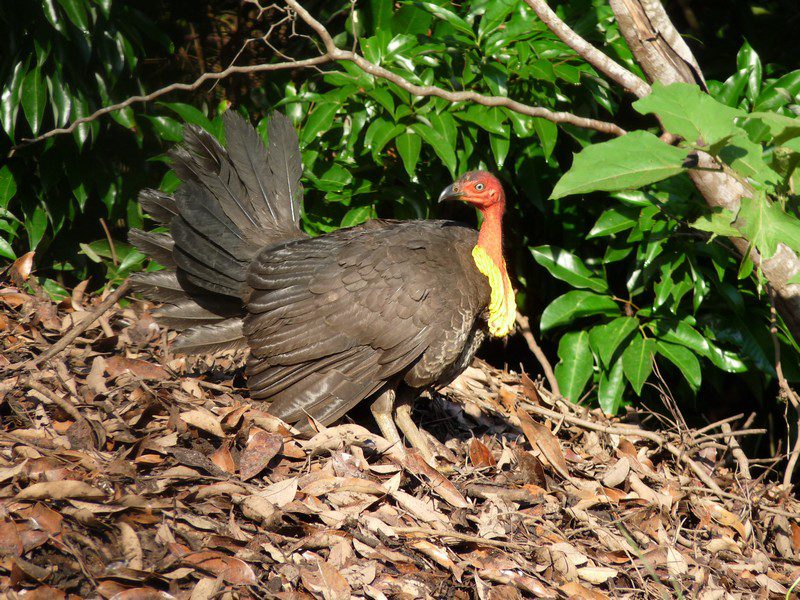
A male Brush Turkey, note the dangley wattles and large feet. PHOTO: CP
|
|
Back in the 1960s and 1970s, the Australian Brush Turkey, Alectura lathami, had almost vanished from around Sydney and Brisbane, although its pre-settlement distribution was in coastal forests from Cape York right down to southern NSW. Early settlers regularly ate them, reducing their numbers around major settlements, but it was during the Great Depression in the 1930s that a much larger human population really took to eating turkeys and eggs, and they were hunted out of many areas, due to being free, large and laying easily accessible eggs. CWA cookbooks contained recipes using their eggs and advice on hanging the birds to make the flesh more tender.
|
|
After that, it was assumed that the species was permanently gone from many areas of its former range, as urban development spread out from major cities. In the early 1970s, native birds joined the ranks of protected Australian fauna and after that the turkeys began such a remarkable recovery that now they are at home in suburbia and are rapidly returning to, and thriving in, areas that they had been driven out of long ago. In Brisbane, their numbers increased by 700% between 1980 to 2000, going from 'rare' to 'everywhere'.
|
|
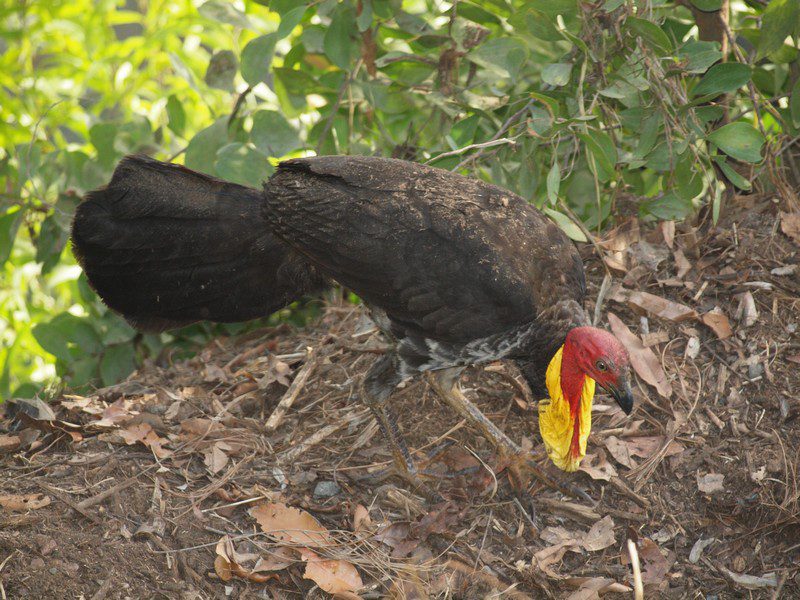
Brush Turkey's eat a mixture of worms and other invertebrates, seeds and fruits. They find food by raking the leaf litter, and also pick fruits from low hanging plants and even break open rotten logs to get at tasty grubs. Their raking aids decomposition of leaf litter helps to enrich the soil in the forests where they live, and also reduces fuel for fires as it speeds up decomposition.
|
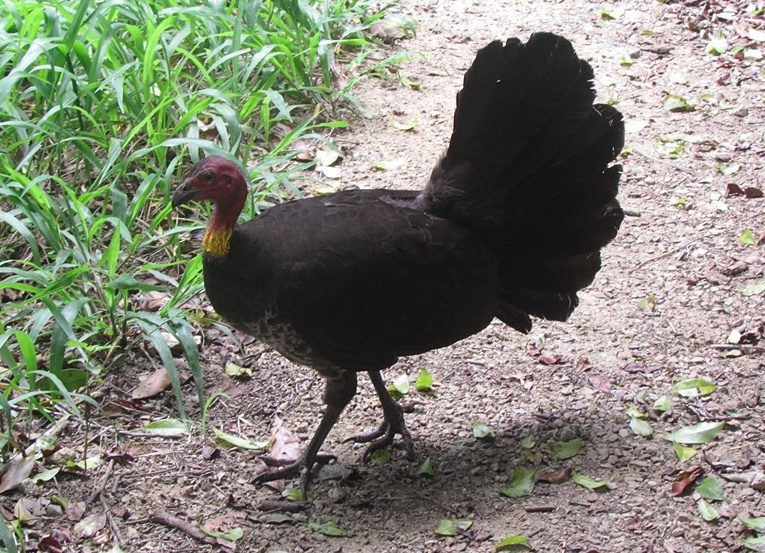
Males are a little bigger than females, have brighter red heads with less feathers, and larger yellow neck wattles, which get bigger in spring to the point where you might wonder how he doesn't trip over them. He can actually retract them out of the way if needed, or to show submission to a more impressive rival. He can also inflate them and push the air through his nostrils to make a booming sound to make his presence known. Birds can see in the UV spectrum, and the wattles are UV reflective. There is even a subspecies of Brush Turkeys up on Cape York which has mauve wattles, not yellow, Alectura lathami purpureicollis.
|
The oddly vertical tail does actually make sense when you get to know them: being able to close it up vertically aids manoeuvring through the undergrowth, and prevents it from getting mucky when they are raking. They can fan it out like the traditional Christmas turkey if they want to show it off, which the males do to show dominance. If pursued by a predator, they can deliberately shed their tail feathers in order to escape becoming dinner. Feathers need maintenance, so they groom them with their beaks. They also take dust baths, and spread their feathers out to bake in the sun, these activities remove grease and dirt, and deter parasites.
|
|
Although they are generally solitary outside of breeding, and not great fliers as adults, they often roost in groups high in a tree at night, possibly to avoid predation from Powerful Owls and Pythons. There is much noise and flapping as they sort out the pecking order of who gets the higher spots; those in the lower branches are likely to be crapped upon.
|
|
|
|
They live to rake. PHOTO: CP
|
|
Brush turkeys and the other members of the ancient megapode family, and along with scrub fowls are thought to have emerged about 18-25 million years ago in Australia and Papua New Guinea. Gardeners worried about the rakings of modern brush turkeys, can thank their lucky stars that the 8kg, 4 times bigger Progura gallinacea which used to rake Australian forests became extinct about 50,000 years ago.
|
Megapode means 'big feet', the group also includes the Orange-footed Scrubfowl and the Malleefowl. The power of these feet to modify their environment can only be marvelled at: in the breeding season, a male can rake up a pile of up to 4 tonnes of perfectly balanced compost for his nesting mound. As gardeners know, the perfect ratio of brown and green material, and moisture, is critical to making a functioning compost, and the turkeys are masters, expertly regulating the heat of decomposition inside the mound to incubate their eggs.
|
|
Males choose their site in winter and start mound building in spring. From a male turkey's point of view, a garden with some shade, plenty of mulch, irrigation and dense plants for the chicks to hide in, looks like paradise. Breeding starts around September, continuing until around January. It's not as easy as it looks; it requires skilled site selection and careful construction to ensure the right conditions, and huge amounts of effort. They need good composting materials within raking range (this can be a up to 100m), shade to prevent drying out, and just enough moisture: too much makes the mound too cold, while too little stops microbial activity.
|
|
|
|
A Brush Turkey female. PHOTO: JS
|
|
|
During breeding, for males, life centers on preparing and maintaining the mound; he will work all day, every day, raking in mulch to build it. Once it is built he obsessively checks the temperature using special sensory pits in his beak, sticking his head right down into the mound; this is probably why both sexes are bald: getting around with compost all over your head is not a great look.
|
|
|
He manages the temperature of the mound by either raking more litter on, or taking some off. Your local male turkey is also a weather forecaster: if rain is coming, he will rake on more material to protect it from getting too wet inside and cooling down. When not tending the mound, he spends his time watching for eligible females, male rivals or any intruder that might be a threat to his eggs, such as Goannas, snakes, feral pigs, Dingoes and foxes. Occasionally he has time to grab a feed. Really successful males can attract up to 12 different females to lay in a mound, and some workaholics even manage two mounds at once.
|
|
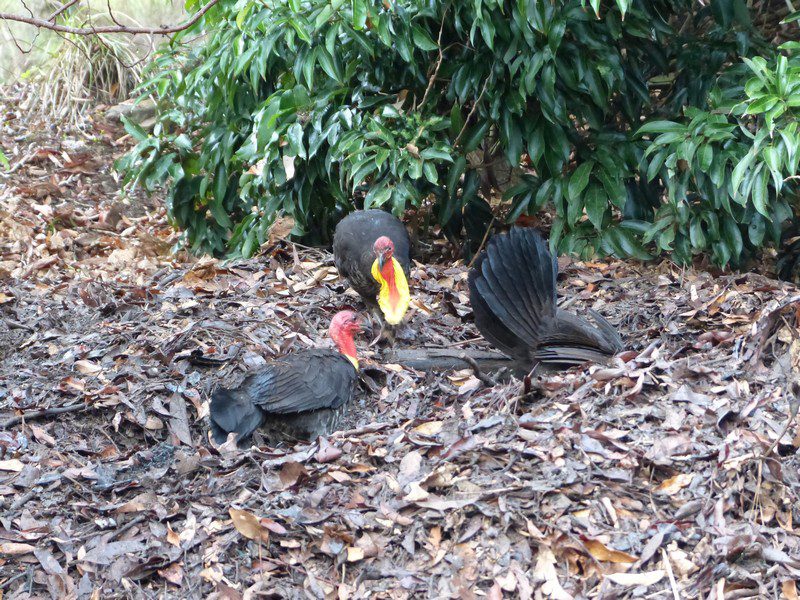
Females lay early in the morning, so this is rush hour on the mound; females dig multiple holes in the mound to check it out and chase each other out of the away if they want to lay. The male chases away rivals, and females who are not laying. Females first check how good his mound looks, then they dig in and test the temperature to see if it's suitable. This takes time, she needs to be sure that her big investment in the egg is not wasted.
|
While this is going on he fusses about her, harassing her to hurry up. He will try to mate with her before she lays, as the price of entry, then again after she has laid her egg; the next egg will definitely be his, whoever's mound she lays it in. Genetic tests have shown that 28-44% of eggs in a mound are fathered by turkeys other than the mound owner. Since there is zero parenting anyway, he will never know!
|
|
Once laid, the egg is gently covered with fine compost, then there is more energetic raking and what a researcher has called 'the stampy dance', as both birds tamp down the soil on top. The egg weighs about 180g, almost 10% of her body weight, so understandably she feels her work is done and leaves, until she is ready to lay the next one, which could be in 2-5 days. She can lay up to 20 eggs per season. The male then ensures that the egg chamber is maintained inside the critical
|
|
32.5-34.5˚C range needed for the 49 days that it takes for the chicks to hatch.
|
|
|
|
The girls check his work. PHOTO: CP
|
|
The eggs have adaptations to allow the chick to grow in an environment low on fresh air and full of hostile bacteria and fungi. Their shell is 31% thinner than most bird eggs, and has lots of special pores to get oxygen in and waste gases out. It's coated in high-tech calcium-phosphate nanoparticles that repel pathogens, and it has a much bigger yolk for its size, that allows the chick to develop to independence in the egg.
|
At hatching, the chicks break open the egg with their feet (of course), then they rest for about 16 hours in an air chamber made with their feet. It takes them around 40 hours to dig themselves out from 1.5m deep in the mound, maintaining an air space around themselves as they go. As they work, they preen off the protective keratin sheaths on their feathers, and just before emerging they pause to listen for sounds of danger above. When they emerge, they literally start life running, and can also fly well just hours after they hatch. Fully independent and relying on instinct, they take cover in thick shrubbery to survive.
|
|
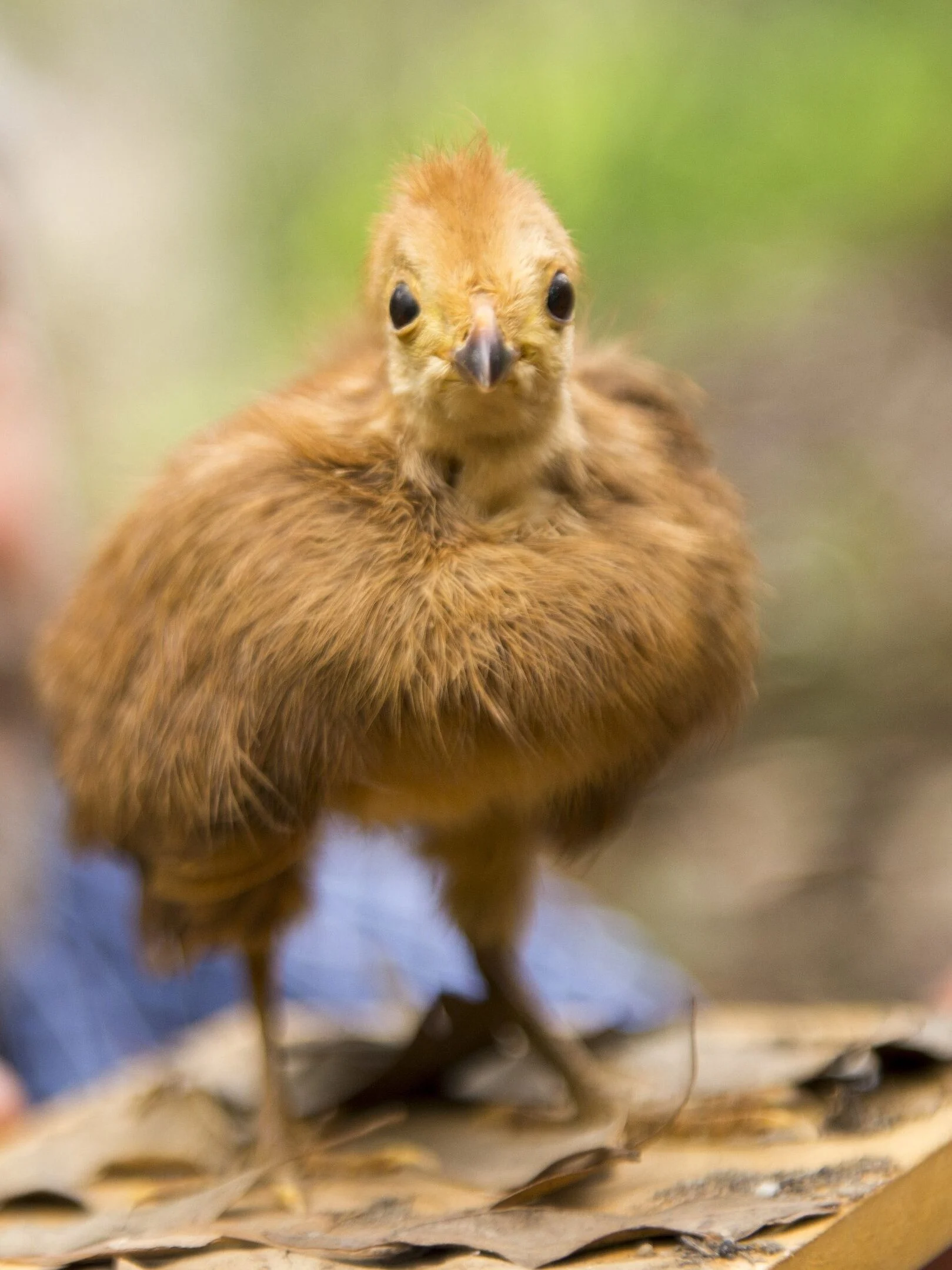
No need to call Fauna Rescue for these baby birds; they need no help from parents or humans. They develop fast, getting adult plumage and the start of a tail in one month, and reaching near-adult size within three. In nature only a few will survive. Ornithologist Darryl Jones completed his PhD on their reproduction, and found that just one in 200 survives to adulthood, so every one that you see is one of the lucky ones.
|
|
|
|
Photo: Esther Beaton, Australian Geographic
|
|
Brush turkeys are a challenge to live with for some gardeners, but they are just trying to survive, and you have to admire their adaptability. Like all native wildlife they are protected, so it is illegal to relocate them (because it is likely to be fatal to them), or to interfere with the mound once eggs are laid, as this will kill the chicks. The experts offer these tips to help manage turkeys in your garden:
|
- Anything above the turkey's line-of-sight goes unnoticed, so raised beds above 70cm height are great for protecting veges; dot them with bamboo stakes for extra insurance against incursions
- Enclosures around vege gardens keep out wildlife, use 5mm or less mesh, this doesn't entangle animals. Tree guards can help too.
- Do your planting outside of the nesting season so they can get established before raking starts
- Once established, thick woody ground-covers deter raking
- Placing heavy items such as logs or rocks next to plants protects them
- Coir mesh pinned over mulch deters raking. Metal such as chicken wire is not recommended; it can injure them.
- If a mound appears in an impossible spot, remove or cover it immediately, before egg laying starts.
- If you have room, establish a mulch pile, partially shaded (80%) by a tree to encourage him to move there
|
None are guaranteed to work, and it might be easier to just tolerate them.
|
|
|
If you want to help Brush Turkeys, they really don't need food handouts, in fact they may lack the nutrients that they need, encourage them to become thieves, or even attract more birds than the area can support. The best thing to do is just give them space to live, plant some bushy understorey to provide shelter for chicks, keep your cat inside and provide water in hot weather. Then sit back and watch the antics, it's better than TV.
|
|
|
|
|
Amazing Annoying Birds: Living with Australian Brush Turkeys, Ann Göth, Natural Publishing, 2023
|
|
Talking Wildlife, Ric Natrass, Steve Parish Publishing 2004
|
|
|
|
The forgotten pollinators: story & photos by Tony Vernon
|
|
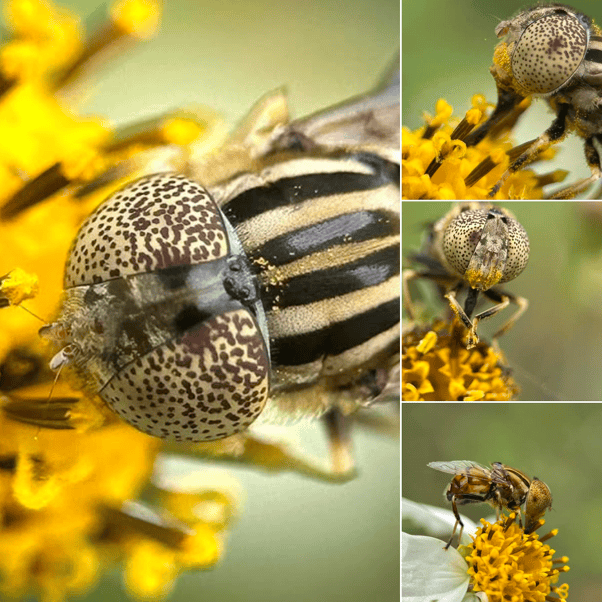
Bees are not the only pollinators, there are many other insects including, moths, beetles and flies that also play a crucial role in plant pollination. This fly, known as the Golden Native Drone Fly, (Eristalinus punctulatus), is a nectar feeder, and like bees, transfers pollen from flower to flower while feeding.
|
|
The four brown stripes on the thorax and the distinctive eye patterns make for easy identification. Males have eyes that almost meet, while female flies like this one have a wide spacing between the eyes. The larvae are known as Rat-tailed Maggots and live in drains and wet, rotting vegetation. (Info from the Brisbane Insects website)
|
|
|
|
|
|
|
What's showing: Coral Tree Erythrina variegata
|
|
|
Common name: Coral Tree, Indian Coral Tree
|
Description: A small deciduous tree to 6-10m, with numerous scattered thorns on the branches and trunk, becoming fewer with age.
|
Distribution: In beach forest on sandy and rocky soils, in the Northern Territory & Cape York down to Southeast Queensland, as well as Africa, the Indian Ocean Islands, Asia, Malesia and the Pacific Islands.
|
Leaves: Trifoliate, 25-40cm long, leafleats diamond-shaped, thin-textured, light green, 8-17cm x 10-20cm, the terminal leaflet is longer than the others.
|
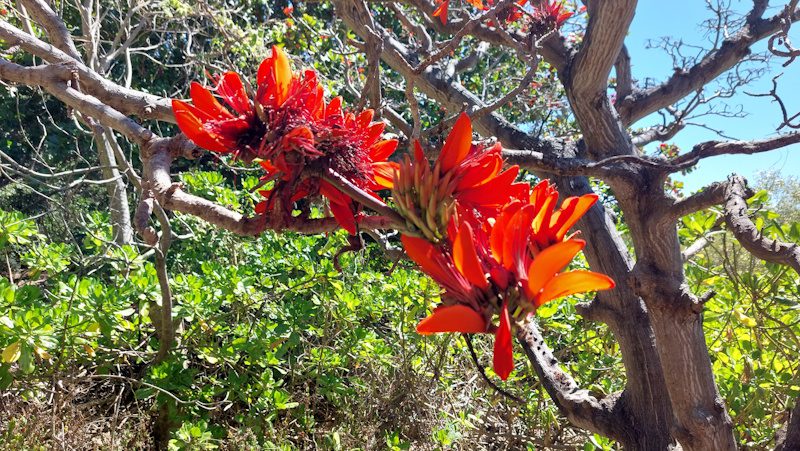
Flowers: Flowers when leafless. Conspicuous bright red pea flowers 4-5cm, borne in terminal racemes 15-35cm long.
|
Fruit: Brown pods, veined, 8-12cm long x 2-2.5cm wide, constricted between the seeds. Seeds maroon, about 1.4cm long, similar to a kidney bean.
|
Notes: Spectacular flowers in spring make this a good feature tree, but plant it where you will not brush against it as the spines are savage when the tree is young. Needs an open sunny spot. The flowers are rich in nectar that attracts many birds.
|
|
Uses: It is used as an ornamental tree, the leaves are used to wrap meat in Vietnam, its bark and leaves are used in traditional medicines in India and Asia, it is used in agroforestry as the leaves and seeds are eaten by stock. The seeds are poisonous to humans when raw, but can be cooked and eaten as beans. Raw, they can be used as a fish poison.
|
|
|
Across the Top: Gardening With Australian Plants in the Tropics, Compiled by Keith Townsend for SGAP Townsville, 1994.
|
|
|
|
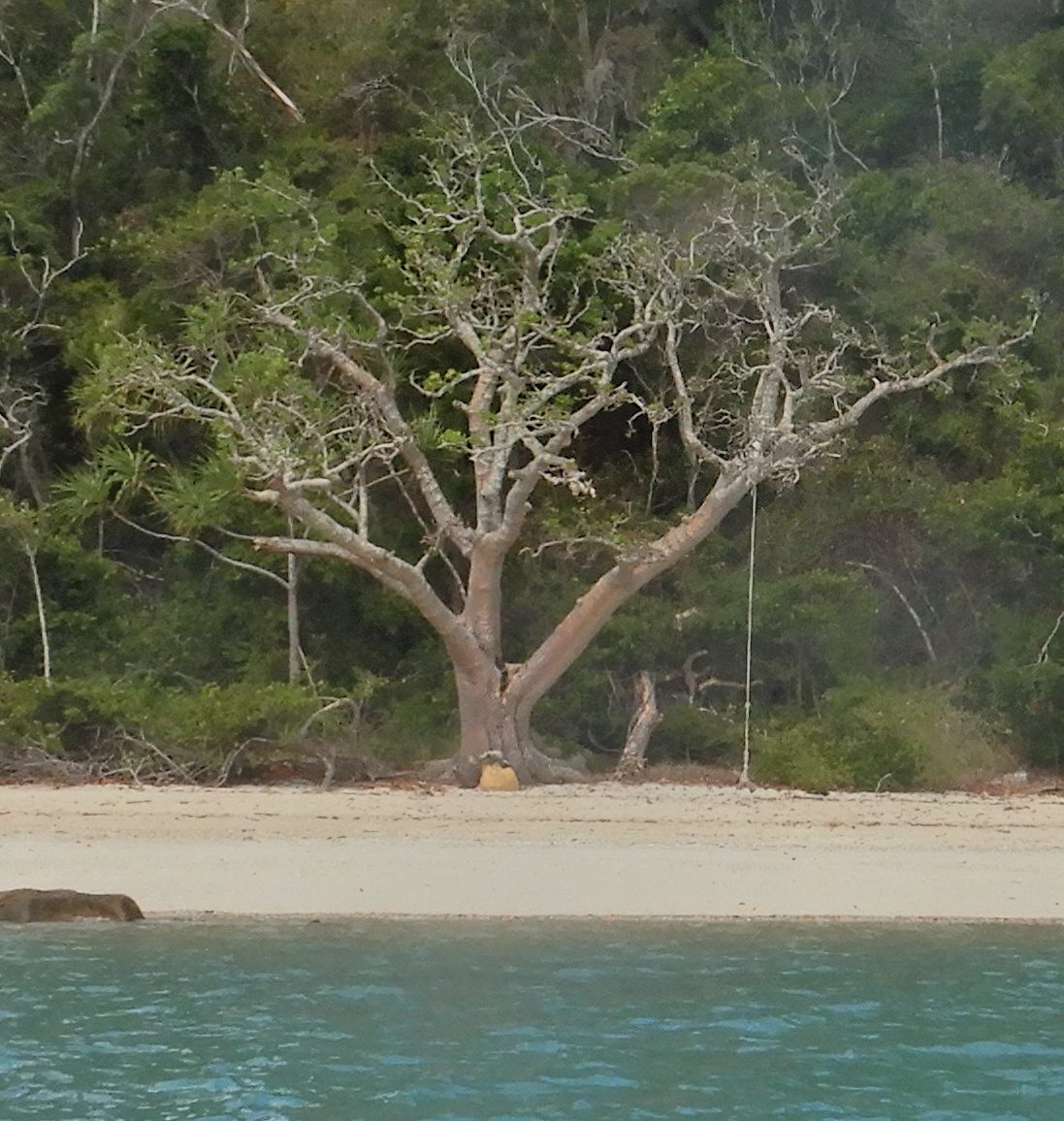
A huge old specimen just getting new leaves, note the swing on it, at the top of Macona Inlet on Hook Island. PHOTO: JS
|
|
|
|
Flowering this month in the Cannonvale 'Botanic Gardens' . PHOTO: JS
|
|
|
|
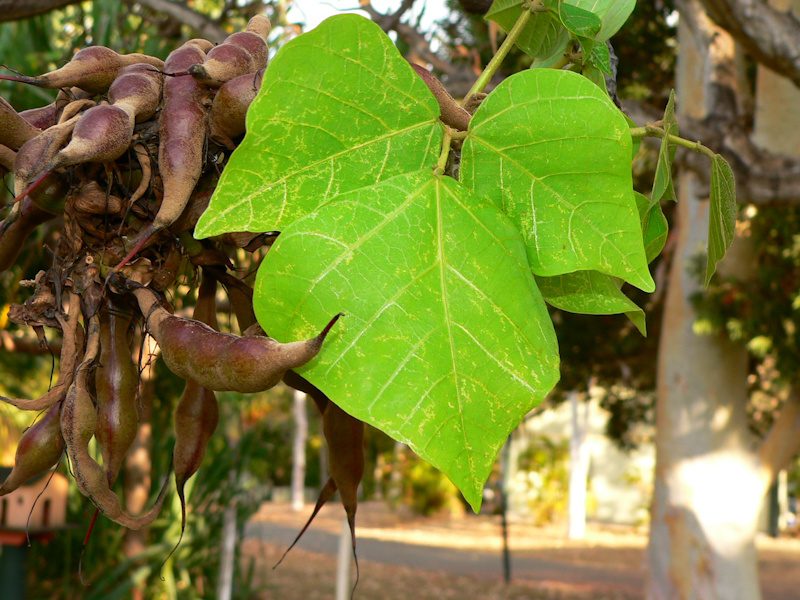
The leaves and mature seed pods.
|
|
|
|
|
Erythrina, the generic name, is derived from the Greek word erythros, meaning "red", referring to the flower color of certain species.
|
|
The species name variegata comes from the Latin variegatus meaning variegated. A variant of the species has variegated leaves (conspicuously white veins on an otherwise green leaf). This variant may have been the one described by Linnaeus.
|
|
|
|
Weed hall of fame: Murraya paniculata cultivars
|
|
|
Description: An evergreen shrub or small tree to 6m, multi stemmed, grey bark becomes fissured with age.
|
Leaves: Alternate, pinnate, glossy dark green to 60-120mm long, with 3-9 alternate elliptic to obovate leaflets, 10-90mm x 5-60m, smelling of citrus when crushed.
|
Flowers: White, 5-petalled, 20-40mm wide, 10-18mm long, borne in terminal and axillary sprays: similar in perfume and appearance to citrus flowers.
|
Fruit: Ovoid berries, orange or red when ripe, 8-20 x 10mm, each containing 1-2 cream or brown seeds.
|
Spread by: Birds, other fruit-eating animals and dumped garden waste.
|
Invades: Gardens, roadsides, pastures, disturbed sites, creek banks, forest edges, open forest and rainforest. Able to establish under intact rainforest canopy.
|
Notes: A garden escapee extensively used in landscaping and now widely naturalised. Listed in the top 200 weeds in SE Queensland.
|
|
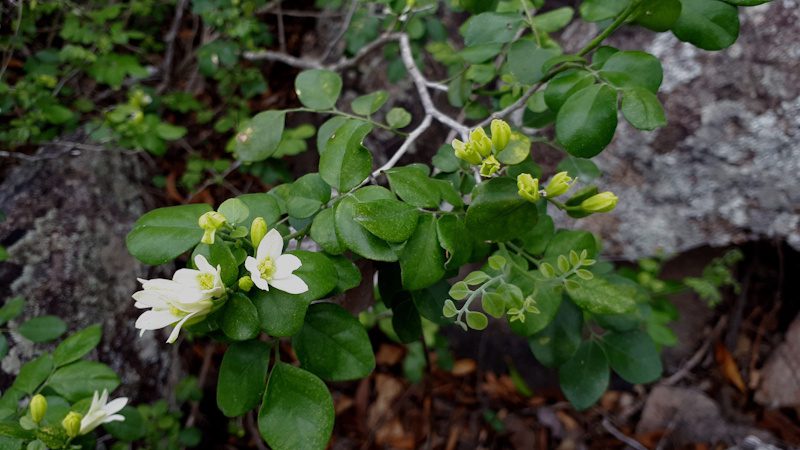
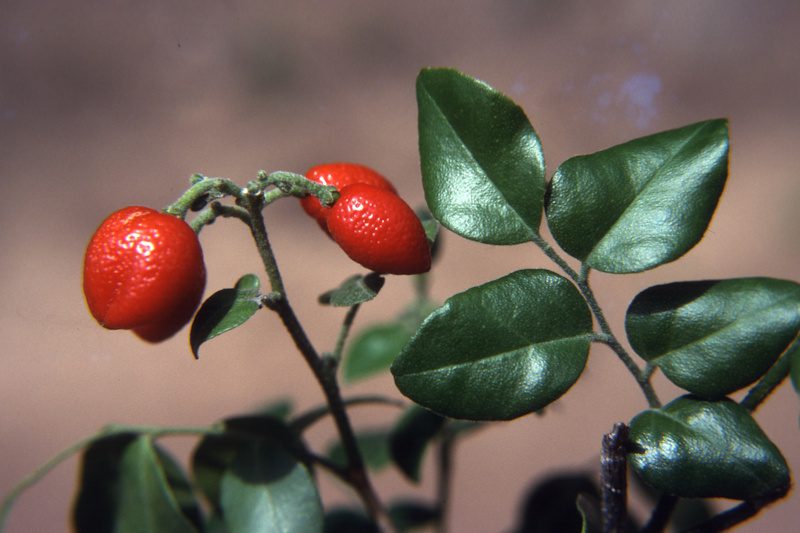
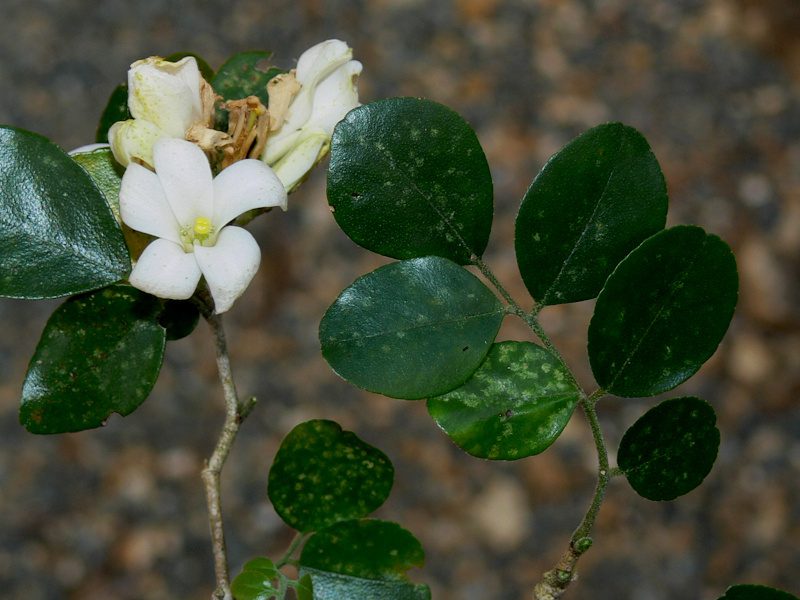
Very similar in appearance to the local native Murraya lucida (previously called M. ovofoliolata) photos below, a low spreading shrub which is distinguished by its 5-10 ovate leaflets with a surface with easily visible oil glands, smaller numbers of flowers and ellipsoid red fruits with a dimpled surface. The native species lives in dry rainforest and vine thickets.
|
|
|
|
Murraya lucida in the wild, Cape Edgecumbe, Bowen. PHOTO: JS
|
|
|
|
Murraya lucida Fruits are more pointed & more dimpled than Mock Orange.
|
|
|
|
Murraya lucida flowers after rain, produces less flowers and has very visible oil dots on its more ovate, less flattened leaves.
|
|
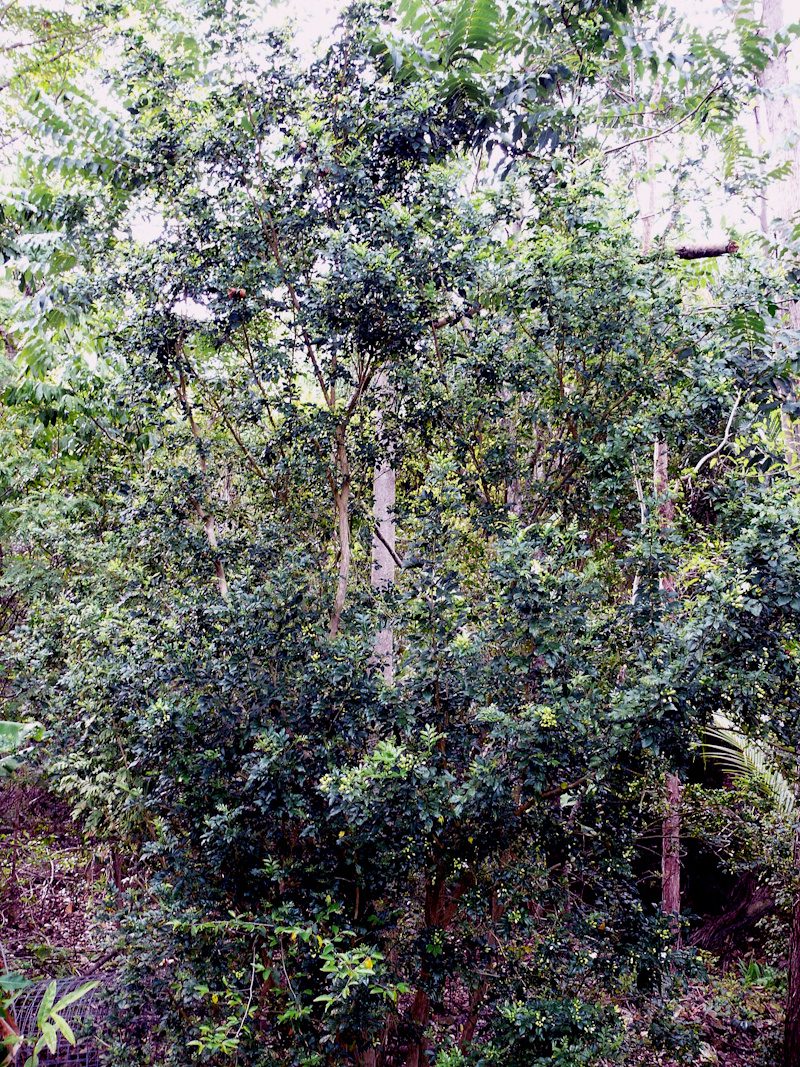
|
|
Weedy Murraya paniculata cultivar growing in rainforest. PHOTO: Steve Pearson
|
|
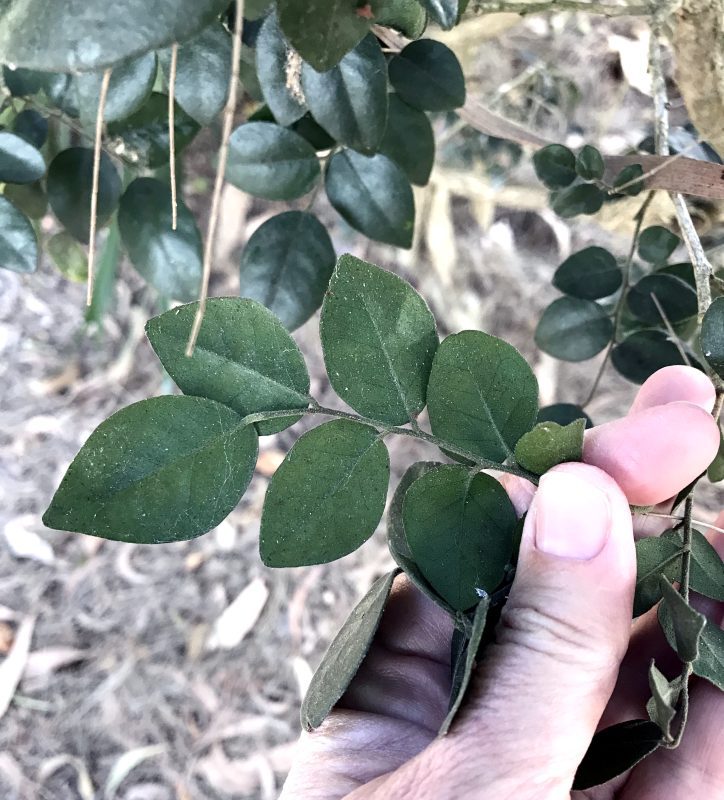
|
|
Murraya paniculata cultivar showing the flatter, more pointed leaves. PHOTO: CP
|
|
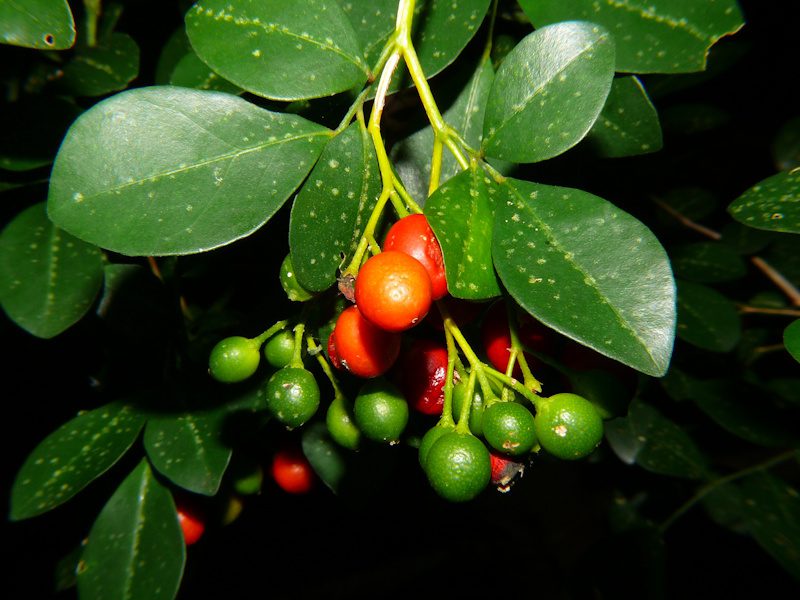
|
|
Murraya paniculata cultivar fruits & leaves. Note smoother skinned, rounder fruits compared with the native Murraya.
|
|
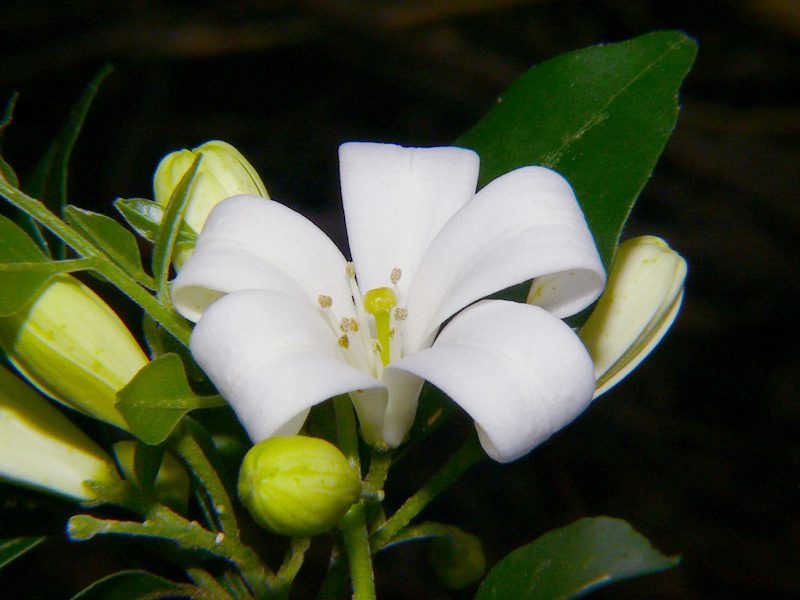
|
|
Murraya paniculata cultivar bears many more flowers. PHOTO: CP
|
|
|
The genus Murraya was named after Named for Johann Andreas Murray, an 18th century Swedish student of Linnaeus, later a professor of botany and medicine at Göttingen.
|
|
lucida meaning 'shining', referring to the glossy leaves.
|
|
|
|
|
Successful weed control relies on follow up after the initial efforts. This means looking for and killing regrowth or new seedlings. Using a combination of control methods is usually more successful than just one. Many weeds will have a 'seed bank'; seeds that last several years in the soil, so try to minimise 'deposits' (new seeds) and maximise 'withdrawals' (weed removal) so that over time less new seedlings will appear.
|
|
|
Hand-pull individual plants, particularly in moist soil. Remove whole plant including roots, consider applying mulch to discourage regrowth. Bag and remove, dispose of in landfill if seeds are present.
|
|
|
Follow up: monitor treated areas regularly for any new seedlings or regrowth.
|
|
|
An off-label use permit (Permit No. PER11463) allows the use of various herbicides to control environmental weeds in non-agricultural areas, bushland and forests (always read the label carefully and follow as directed).
|
|
Cut-stump or basal-bark treat actively growing plants with Glyphosate 360g/L.
|
|
|
|
|
Weeds of the Mackay-Whitsunday Region, Mackay Regional Pest Management Group, 2013.
|
|
|
|
|
|
|
|
|
|
|
|
How you can help:
|
If you're interested in doing your bit for the local
environment and socialising with like‐minded people, we have volunteer activities on Tuesday & Thursday mornings, and more. Contact us!
|
|
|
|
WCL is a community not‐for‐profit. We rely on donations to assist with our projects.
|
WCL is registered charity; donations of $2 or more
are tax deductible.
|
To donate, please contact us or go to the
|
|
|
|
|

|
CONTACT
CONTACT US FOR INFORMATION ON
|
- Natural Resource Management
- Land Management Plans
- Native Plants
- Environmental Weeds
- Volunteer Activities
|
WCL TEAM
All part-time.
Coordinator & Secretary: Christine Peterson
Admin/Finance: Leigh Donkers
Nursery Manager: Nicole Murphy
|
Field Staff: Kayla Simpson, Denise Hemingway
|
Management Committee:
Jacquie Sheils, Chair & Newsletter Editor
Jim Dickens, Treasurer and Forest Guy
Dale Mengel
John Casey
Bill Blair, Canegrowers Proserpine
|
|

|
|
|
Thank you to our supporters:
|
|
|
|
|
|
|
|
|
|
|
|
|
|
|
|